No Excuse Zone: The Time is Now to Fall Back Into
Fitness
The Labor Day holiday closes out the
season of barbecues, lounging by the pool and overindulging during summer
vacations. As you embark on a new month and a new fall season, you have an
important choice to make. Are you going to jump on the train to a healthy and
fit lifestyle or opt for a layover until the New
Year’s resolution season rolls around?
September is the month of do-or-die
for establishing a fitness routine before the busy holiday season arrives.
Don’t miss out on this small window of opportunity to get back into the healthy
habits that you may have abandoned during the summer months. It’s time to bust
through your excuses and fall back into a routine that will get you the results
you want.
Welcome to the “no excuse zone.”
No Time? Make Some.
One of the top excuses personal trainers nationwide hear over and over again about starting a fitness program is lack of time. When clients tell Sean Sullivan, personal trainer and studio owner at Fitness Together Brecksville, that they don’t have enough time in the day to exercise, he offers a simple math equation to help them put their daily schedules into a more realistic perspective.
One of the top excuses personal trainers nationwide hear over and over again about starting a fitness program is lack of time. When clients tell Sean Sullivan, personal trainer and studio owner at Fitness Together Brecksville, that they don’t have enough time in the day to exercise, he offers a simple math equation to help them put their daily schedules into a more realistic perspective.
24 hours in a day minus 8-9 hours of
sleeping, leaves 15-16 hours of awake time.
Sullivan believes that if you can’t
take as little as 30 minutes per day out of a total of 15-16 waking hours doing
something good for yourself such as working out, then you aren’t being
realistic about the actual total number of hours in a day. Breaking it down
even further, 30 minutes is only 1/30 of your total waking time each day. So,
even if you have 29 items on your daily to-do list, you still have time to make
working out the 30th item on your list.
To make sure that you carve out time
and follow through on working out, Sullivan has found it helpful to have
clients actually schedule their workout times in their smartphones or calendar
books. Simply write your name in designated time slots each week. Or, if you
feel guilty about taking time out of your day for yourself, you can always put
a code name in your calendar such as “Operation Healthy and Fit.”
No Energy? Get Some.
While rest is important for recovering and repairing your mind and body, consistent inactivity can drain your motivation and energy levels. Having no energy can be a vicious cycle because if you wait to start working out until you have enough energy, then it will never happen. What you actually need to energize yourself is to get off the couch, step away from the electronics and get active. You’ll love the results you experience and enjoy the endorphins that are awakened when you physically push your mind and body.
While rest is important for recovering and repairing your mind and body, consistent inactivity can drain your motivation and energy levels. Having no energy can be a vicious cycle because if you wait to start working out until you have enough energy, then it will never happen. What you actually need to energize yourself is to get off the couch, step away from the electronics and get active. You’ll love the results you experience and enjoy the endorphins that are awakened when you physically push your mind and body.
“You just have to start and get the
ball rolling because exercising regularly actually will increase your energy levels,”
Sullivan explains. “I tell my clients that the first result they will see after
they start working out with us is increased overall energy.”
No Money? No Problem.
Getting fit doesn’t have to mean joining a big-box gym with expensive introductory and monthly fees. An effective fitness routine can simply mean grabbing a group of friends or family members and doing calisthenics in a park (body weight squats, pushups, dips and lounges) or going for a walk/jog around your neighborhood. Even if you are tight on money, you can be active for free if you just get out and get moving.
Getting fit doesn’t have to mean joining a big-box gym with expensive introductory and monthly fees. An effective fitness routine can simply mean grabbing a group of friends or family members and doing calisthenics in a park (body weight squats, pushups, dips and lounges) or going for a walk/jog around your neighborhood. Even if you are tight on money, you can be active for free if you just get out and get moving.
If you’re looking for a quick but
effective workout routine that can jumpstart your fitness regimen right at
home, Lisa Clark, personal trainer at Fitness Together
Brecksville, suggests starting with a simple set of 10 push-ups,
10 body weight squats, 10 sit-ups and 10 jumping jacks. Take a short break
after finishing the set and then do it again, working your way up to completing
the set of exercises three to five times.
“You’re working your whole body and
you’re getting your heart rate up,” Lisa says. “Squats and pushups are the two
mack daddy movements for working your total body.”
 Don’t Know Where to Start? There’s
No Better Time than the Present.
Don’t Know Where to Start? There’s
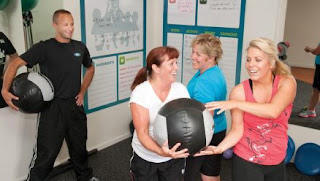
No Better Time than the Present. To get started with a fitness routine that gets results, you need to first find a workout environment that fits your personality. If you are a social butterfly who is motivated by others, then a group workout environment may be your best option. On the other hand, if you are a shy person who prefers to work out alone, then you may enjoy a one-on-one personal training environment. Either way, just find an environment that fits your style and aim for at least 30 minutes, three times per week, of strength training and cardio exercise, suggests Sullivan.
“Take into account your overall
lifestyle, your stress levels and your personal goals when finding a routine
that will help you get the results you want,” Sullivan advises.
The time is now to start making time
for you and your health. If you put into place the above strategies, you’ll
then have a clear path to achieving your fall fitness goals.
So, what's your excuse? Get started with a personal trainer in Brecksville now!
©
2015 Fitness Together, Inc. All Rights Reserved. Powered by Fusionbox.
About | Contact | Franchise | Suppliers | History | Leadership | NutritionTogether |Sitemap | PrivacyPolicy | TermsofUse | Facebook | YouTube | Twitter | Linkedin